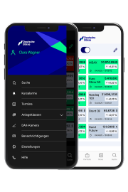
Sentiment indicator of Deutsche Börse
Market sentiment

Opinions make markets: Every Wednesday, Deutsche Börse surveys the market expectations of active investors and has the results interpreted in accordance with the findings of the behaviour-oriented capital market analysis, Behavioral Finance. The analysis is published here around 4 pm.
Editor's Note: Latest Analysis of Market Sentiment on June 24, 2026
For 25 years, Deutsche Börse’s sentiment survey—featuring Joachim Goldberg’s analysis—has guided many investors through bull markets, bear markets, and everything in between. Although the traditional series will come to an end in late June, its contribution to our understanding of market psychology will endure.
Market sentiment analysis as of April 8, 2026: “A leap of joy, but not a liberation”

Joachim Goldberg interprets the strong reaction of German blue-chip stock prices to yesterday’s ceasefire as an overreaction driven by heightened anxiety and fear. This stands in stark contrast to the reaction of mid-term-oriented professionals, whose positions have barely shifted. According to the behavioral economist, the price gains were insufficient to move out of the red. This group’s sentiment index stands at +30 points, clearly in bullish territory. The situation is different for retail investors, many of whom sold shares and/or went short. With profits, Goldberg believes. Their sentiment stands at +3 points.
Goldberg sees short-term-oriented market participants behind the DAX gains. The downside is still poorly protected should the news situation shift again. There is also little potential demand on the sidelines. Not good signals from the behavioral finance side.
Your opinion counts: Market expectations of investors
All interested investors are invited to participate. It takes only 15 seconds. Every Tuesday you will receive an e-mail with a survey link. You will receive the results of the analysis by e-mail.

Sentiment analysis now also available as a podcast


You can listen to or download the sentiment analysis directly from this page.
Of course, it's also available on the usual podcast platforms Spotify, iTunes, Podcaster, Amazon, Google, where you can subscribe to it.
Method

Investors with bullish expectations are long, investors with bearish short. Cost prices and imbalances can be deduced in particular from the changes. Often the sentiment index functions as a counter-indicator because there is no potential demand, but this does not fit in every market situation.
Joachim Goldberg
For more than 30 years, Joachim Goldberg has been dealing with the interaction of people and markets. But it was not until he discovered the psychological influences on the financial markets that the graduate banker and former currency trader thought he had come close to what drives and moves the world of finance.
 Deutsche Börse